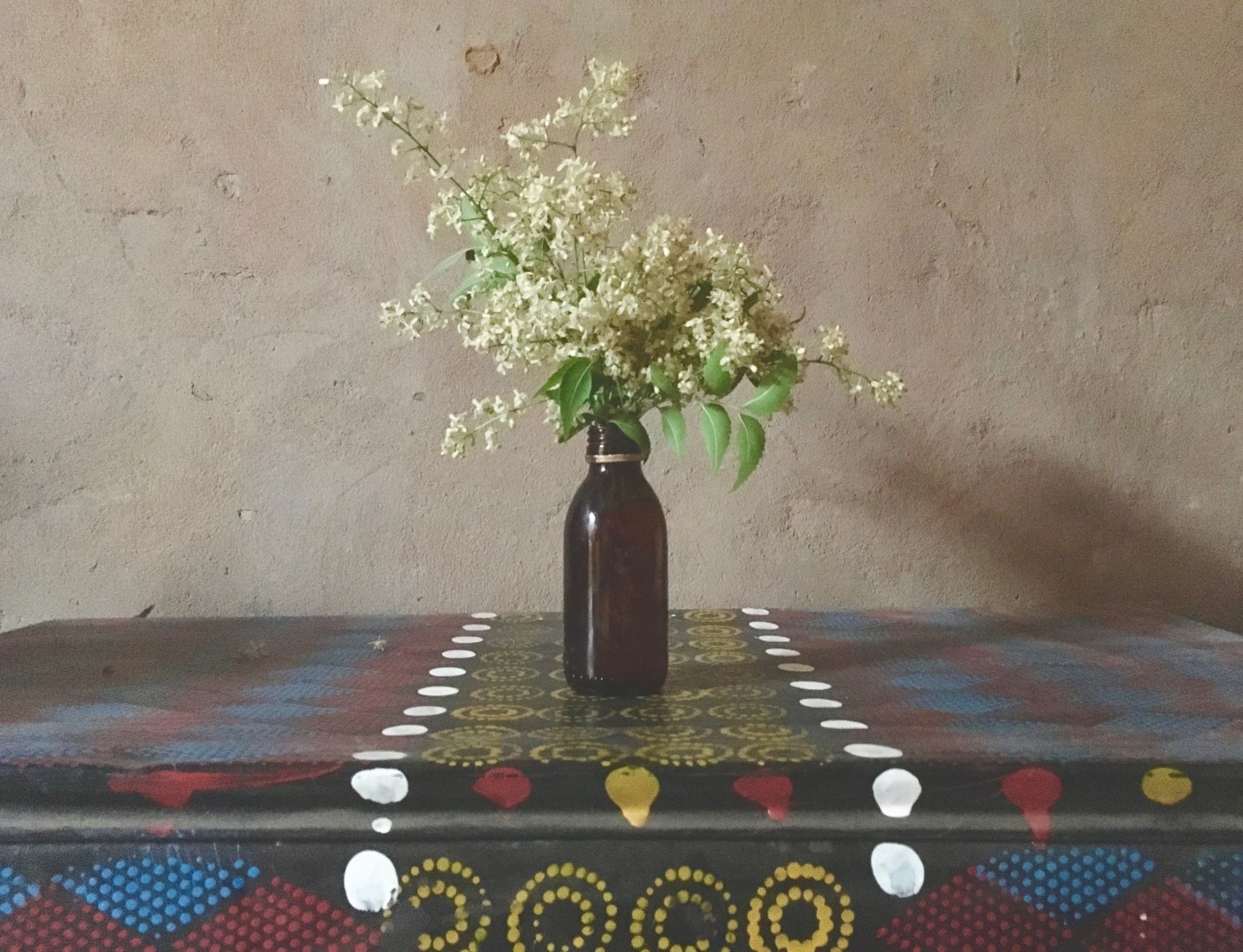
While no day in Senegal is exactly the same, the pattern of village life becomes more familiar with each passing day.

Subaka (Morning)
Before day break, the Islamic call to prayer is spoken over the 4 village mosques – alerting us that a new day has come. Morning cries from roosters and donkeys follow soon after in a seeming competition to wake the community.
Upon rising, we greet our host family and join them for a hot cup of coffee (think black and sweet) and a small loaf of Tapalapa bread. Our personal garden gets a morning watering, and we take a moment to check for new growth, pests, or changes. Family and friends from the neighborhood houses filter through each other’s compounds to give a handshake and morning greeting.
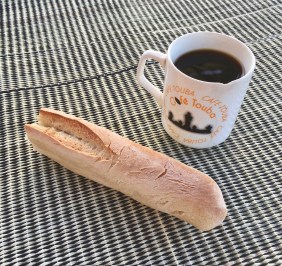
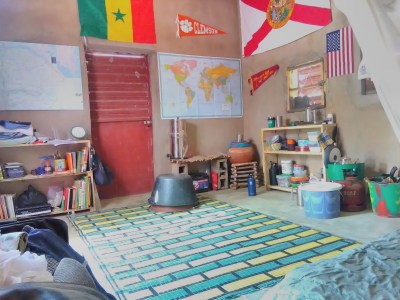
After that, it’s time to sweep our hut and tidy. The gas burner is lit to start a pot of American coffee or tea (Thanks to our family for sending that good stuff our way) and sometimes a fried egg or two help round out breakfast. We take a daily pill for Malaria prevention (our area is very low risk, but Peace Corps requires this as a precaution), along with a few other vitamins and supplements.
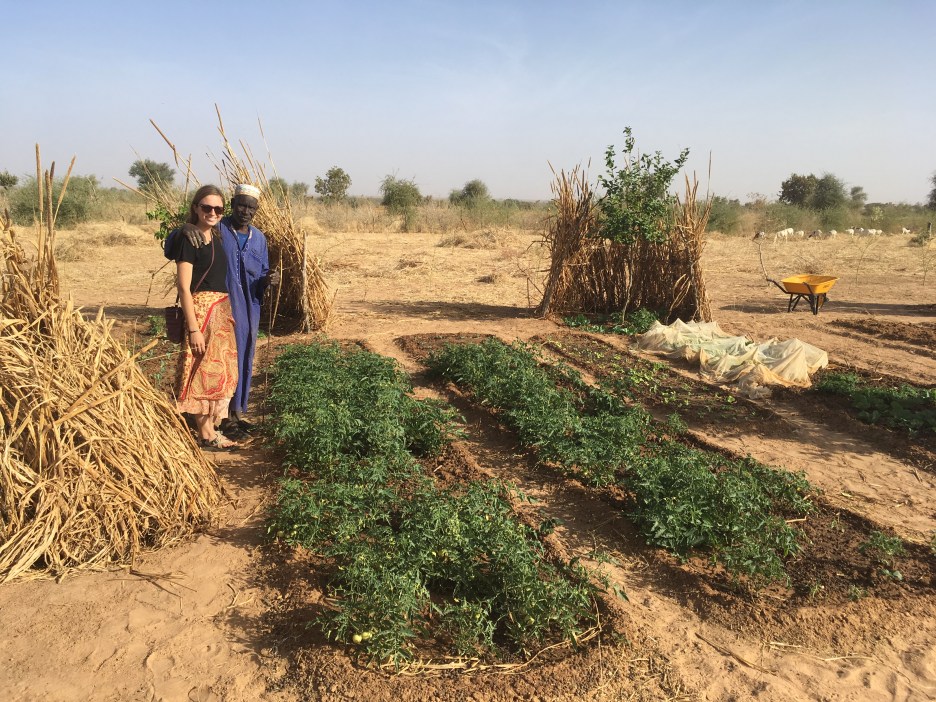
Anywhere from 9:00 am to 1:00 pm we can be found working on various projects. Several days a week it’s off to the Master Farm to work on demonstrations such as vegetable garden bed, pit compost, or live fencing. Other days we might stay in our compound for chores such as tending garden beds, tree nursery maintenance, or washing clothes. If not working with our hands, we head into town to check in with our community, visit with neighboring families and discuss local issues and upcoming events.
Kikiide (Afternoon)
In the early afternoon, as the day begins to heat up, retreat is usually found under a shade structure back at home. This time is often filled by taking notes, reading, research, and and a little breather before lunch.
Sometime around 2:00 or 2:30, our family gathers for lunch. Senegalese lunches are traditionally served in a large bowl which (in our house) is shared between anywhere from 3 to 13 people. Most often, there are 3 separate bowls for different groups of people; young children, men/older boys, and women/older children.

Meals across Senegal differ based on food availability, socioeconomic level, and preference. In our home, our family prepares rice for lunch. The rice may be accompanied by leaf sauce, vegetables, fish or goat. It is culturally important to eat with your right hand only. At our house, spoons are rare and forks are nonexistent. The practice of eating with your hand is consistent throughout Senegal, but many people also use spoons – particularly those who live in bigger cities.
The lull after lunch is felt by all. People retreat for resting, chatting, or braiding hair. This time of day is the hottest, and even the breeze provides little reprieve as the wind itself can be stifling. Every day our eldest sister, named Sabu, settles in to make Attaya, a traditional West African tea. It is a highly caffeinated, highly sugared beverage served in small shot-size glasses. Attaya has three distinct rounds:
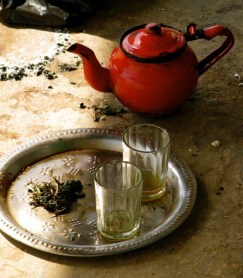
- “Loel” – Brewed to be dark and bitter, with only a slight taste of sugar. Some people say this round is like a young man – aggressive and strong.
- “Sane” – Continuing to use the same tea leaves, this round is brewed to be a happier medium of flavor to sweetness. “Sane” is when the man ages, settled into a comfortable and mellow phase of life.
- “Faartak” – Third times the charm, this round is lighter and exceptionally sugary. Said to be like the old man whose age has left him physically weaker, but sweetened in disposition.
For a few hours, Sabu methodically brews Attaya and practices reading and writing Pulaar between rounds. Children run around, play games, or “cook” dinner in the sand. Adults may take a mid-day bath to wash off the dust and heat of the morning.
As the afternoon stretches, the heat becomes more bearable and families venture away from their homes for work or social obligations. For us, late afternoon “work” is similar to the morning be it agricultural, academic, or community based. Several times a week, Kirby and I have a regular meeting with our CIF for a couple hours. With Demba, we discuss cultural/community questions or concerns, study Pulaar, and talk through upcoming projects and work goals. Our time with him is always refreshing, helpful, and encouraging.
With evening approaching, we are usually back home before dark. The compound buzzes with children playing and adults returning from the day’s activities.
Jamma (Night)
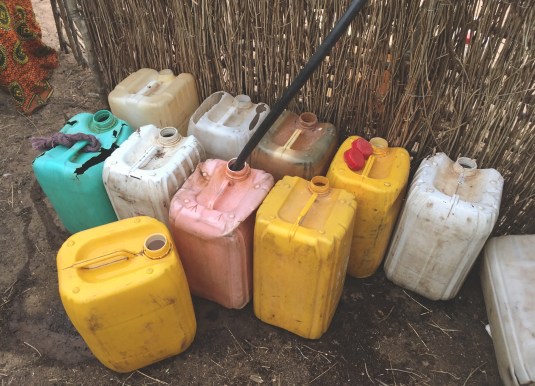
While one of our sisters prepares dinner, women from surrounding compounds congregate at our house’s water faucet to fill water containers for tomorrow’s use. The normal container is a 20 liter cooking oil bottle, washed and repurposed for water storage. On average Kirby and I use 2 to 3 of these per day for bathing, washing dishes, drinking, laundry, etc.
As the sun disappears, our garden gets its second daily drink. Family and neighbors pass through to greet, sharing in the relief of the cooler night air. After dark, around 8:30, the family gathers again around the bowl for dinner. This could be one of several rice-based dishes (ranging from porridge-like to sticky fish rice), or a finely pounded steamed millet with milk, leaf or bean sauce.
Post dinner, everyone settles into the compound to quiet down for bed. Our host father, Souleyman, turns on the radio and the space is filled with traditional music and a Pulaar call-in show. People from all over call the radio host to greet family, friends, and religious leaders over the FM waves.
We often sneak in a shower after dinner, then lay down to read or chat a little before sleep. Recently, as it’s been heating up, we’ve begun sleeping outside on a stick-bed. This is exceptionally cooler than our cement walled, tin roofed house after a full day of soaking up the sun’s heat.

Neighborhood dogs bark warnings toward strange noises, and donkeys bray in a final word for the day. After a full day, however, sleep comes easily. Once eyes are closed, it’s never long before the next day of village life in Senegal begins.
Side note: Much of our daily “schedule” is dictated by the season. Right now, we are leaving cool season and speeding into hot, dry season. Rains are not expected for 3 to 4 months and, until the rains come, less agricultural work is done. Once rain enters the picture and food crops are sown, our community (and thus, we) will spring into a slightly different, more agriculturally based daily schedule.

 thequams.com
Loving to hear from you.
One of your Lake Wales Dads.
LikeLike
It’s wonderful to hear a little about your day in Senegal and the steps you are taking to make a positive impact.
LikeLike
You write beautifully, Emilie. I can close my eyes and easily imagine your life. Thank you, once again, for sharing.
LikeLike
This has got me feeling nostalgic. In Mali, we had a lot old man and young man tea. Afternoons in the shade. Sleeping outside when it got hotter. Those water jugs 🙂 Thank you for sharing
LikeLike
This is incredible to be able to know what you all are up to– so happy that you have a rhythm. Praying that you get a cool breeze comes through.
LikeLike
So enjoy the updates of your new community, thanks for serving others !! ❤️❤️
LikeLike
You are such a great writer! Thank you for giving us a peek into your daily life! I hope you & Kirby are doing well!
LikeLike
Thanks so much for your daily life style. I’m going to be South Africa this summer on a safari. It’s unfortunately to far away to drop in and visit. I will be sleeping on a regular bed. Love you guys! Papa
LikeLike