
I have heard it said by other volunteers here in Senegal that we are often busy doing nothing. I think that this loaded suggestion is an excellent way to describe many of our days here in Senegal. While I am not yet ready to dissect this sentiment as a commentary on our development work, I would like to use it to help explain the internal conflict I feel in regards to the concept of time in Senegal.
Hustle and Bustle
In the United States, everyone is busy. We fill our time with work, chores, and errands, events and meetings. Everyone always seems to be doing something or moving to the next task. People in America seem to always be running late, rushing to the next thing to do, and if we are early, we go out of our way to fill the extra time. We sometimes use busyness as an excuse to avoid social obligations. We say, “I’m too busy,” or, “Sorry, we were busy,” and buried in those excuses, we somehow manage to tout our overfilled schedules as a status symbol.
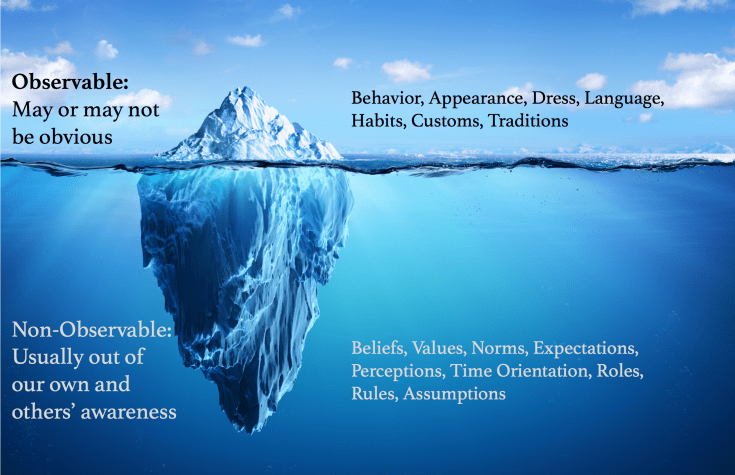
These visible expressions of the American concept of time are just the tip of the iceberg. Below the surface there are many underlying historical and cultural contexts for our busy, fast-paced culture.
Quick Disclaimer
I am not a history buff. I am also not an expert on culture. Furthermore, I am about to make some very broad brushstroke generalizations that are going to make those statements abundantly clear.
I’m going to attempt to briefly explain a portion of an “iceberg” of American culture from beneath the surface, and I have no qualification (other than being a part of it) to do so. To continue the iceberg analogy, I am reporting back to a boat full of scuba certified divers what I have been able to see with a snorkel and a foggy mask.
Just Beneath the Surface
I think the American concept of time as we know it probably began somewhere around the time of the industrial revolution. Around that time, businesses began mass, mechanized production of things that had previously been made by hand. Mechanizing their manufacturing gave companies a competitive edge, affecting prices and the entire supply and demand chain. People from rural areas, many of them displaced by tractors and other agribusiness technologies, moved to urban centers to join a growing labor force. Employees worked around the clock on assembly lines, laboring toward goals of productivity and efficiency. Punctuality was prized and demanded by employers, and employees were tracked by “clocking in” and “clocking out” at the beginning and end of each shift. New technologies, among other factors, allowed companies to continue to push toward maintaining growth.
As a society, we never looked back. The expectations that were placed on us became a pervasive part of our culture. The values of punctuality, productivity and efficiency have trickled down into every facet of our lives. This affects our habits, the way we communicate, and often, the way we perceive success. Stores are open 24 hours a day, cars race from one place to the next, and kids in school receive awards for punctuality. We drive through a restaurant for a meal on the go, and we order household items to be delivered to our doorstep. New technologies continue to push productivity and provide us with information instantly. We are always going, moving toward something, and it often feels like we are working even when we aren’t.
I don’t think these are bad things, nor do I think I am separate from them.
In fact, I think that some of these historical and current trends have paved the way for many, many amazing things, both tangible and intangible, for which I suspect you may already be making a mental list.
Additionally, historical events alone cannot fully explain our culture as it relates to the concept of time. This, too, is only a fraction of the iceberg below the surface. I, myself, am unaware of many of the factors that affect the way I think, feel and act.
Right, wrong or indifferent these values are engrained in me.
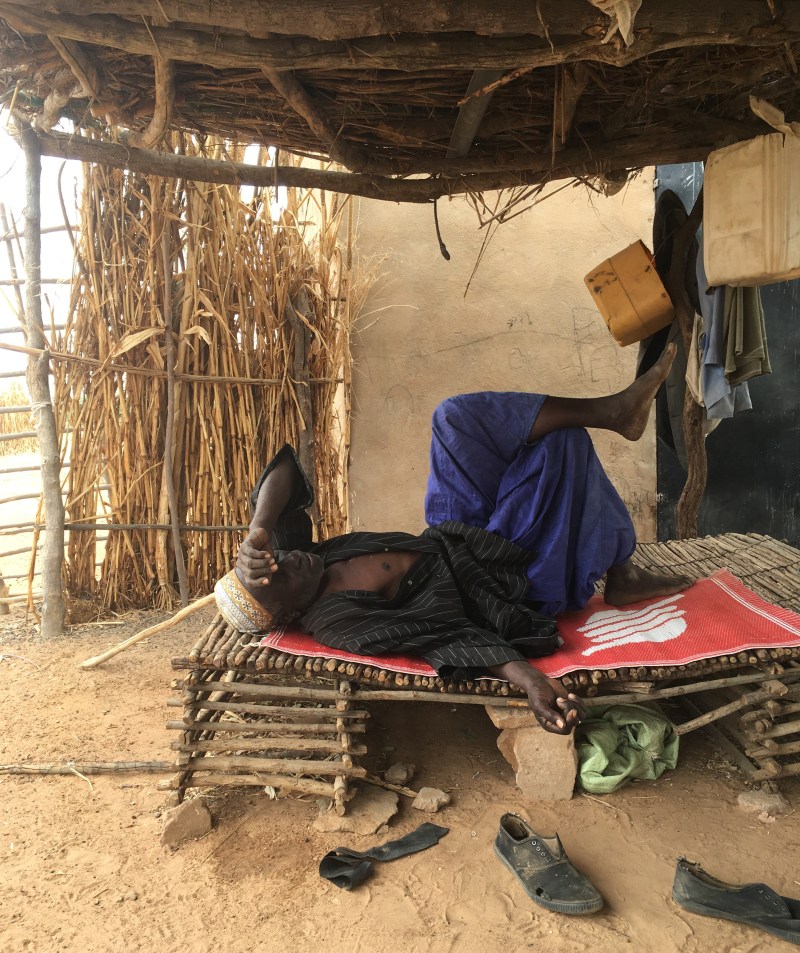
In Senegal things move at a slower pace. Time is often measured not by hours or minutes but by prayer times, where the sun is or when the meal is finished. Punctuality takes a backseat to greetings and hospitality. People work hard, but work is secondary to family and community priorities. Businesses close for lunch and prayer, workers break for tea, and people rest when the heat is unbearable. Busyness is not valued. Rather, having time for leisure is a status symbol.
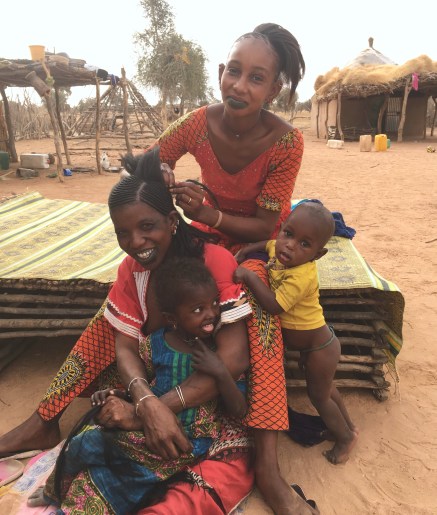
This is an incredibly refreshing change of pace… until I want to do something. Work activities, meetings, trainings, and transportation all happen (if they happen) at a different speed, and it’s easy to get frustrated about the apparent apathetic attitude here toward getting things done. Accomplishing the task at hand is not a top priority for Senegalese people, but that lack of drive is not a form of laziness (usually). I am working to rewire my brain to recognize that drinking tea and chatting with neighbors in the shade is doing something. The longer we are here, the more I appreciate the absence of busyness, even when it feels like I’m not doing anything.

Even though I am from a region of the United States that may fall closer in culture and climate to Senegal than other places, these differences have a big impact. Of course, after only a few months here, I cannot pretend to understand the deeper cultural foundation for these differences. Like the iceberg, only a small piece of the greater structure can be seen from my view above the surface. Below the surface lies an expansive mass, as deep and complex as the one I carry with me.
Little by little, I hope to gain a greater understanding and appreciation for life here in Senegal. In the meantime, I’ll be busy doing nothing.
 thequams.com
Glad to see you giving thorough thought to the thought-provoking difference in the culture you were raised in and the culture your are currently immersed in. Today has been day being “busy about something” for me…..that something being a project at work that is close to overwhelming. I wish to help myself and not let such pressures have such a negative affect on my day and my life.
Always great to hear from you on this adventure you have chosen. I hope you find more about the path you are on and how to make the best of the culture differences. For myself, I will try and look for ways to let my usual hustle not be so prevalent.
So much love,
One of your Lake Wales Dads
LikeLike
Prayer is sometimes just Worked into our day so how beautiful that you are seeing that happen as a daily routine !! Continue to explore 🤗
LikeLike
Lol. Remember what I was trying to express to you in the mountains. Sounds like you are starting to relax and learn that our way of looking at the world is not the only way. In a world where we are destroying our ecosystem rapidly this may be a superior way of being. This is a much older more stable culture than our own and the people are beautiful. The pictures were perfect. Love you guys. Cannot wait to hear about your experiences when you come back to this place.
LikeLike
Lol. Remember what I was trying to explain to you in the mountains. Sounds like you are starting to learn that our way of looking at the world is not the only way. In a world where we are destroying our ecosystem rapidly this may be a superior way of dealing with the world.
LikeLike
Great commentary Kirby. We all (us in the industrial world) get wrapped up in our schedules. Having been raised in Canada but born an American, I have been aware of, and have learned to appreciate cultural differences, since I was in my teens. It is far too easy to mistake a cultural difference for an attitude or lack of respect. I have been blessed to have been able to interact with people from many countries and various regions of North America throughout my life. All have a different perceptions of time. I have learned to smile when I realize/remember that they live by a different clock than I do, and when I do, I appreciate the time spent with them even more.
LikeLike
Nice commentary. You have gone bush. You have a lot of empathy for your host and will move mountains by non action. Sometimes the best goals are not of things that can be measured.
Practice non-action.
Work without doing.
Taste the tasteless.
Magnify the small, increase the few.
Reward bitterness with care.
See simplicity in the complicated.
Achieve greatness in little things.
You cannot lose the things you don’t collect.
LikeLike
What great insights you are taking away from this experience! One can hope that you will be able to find a balance when you get back to the USA, so that you don’t automatically fall back into the hustle and bustle of typical American life.
I just finished a novel in which the culture distinguished between two different types of “credit “ that people could accumulate. The first was financial, which was required for basic necessities. But the second was social credit which was more valued by the members of the society. The more social credit one had, the more they could actually accomplish.
The things you are discussing – greeting ceremonies, taking time to chat, being more interested in the people around you – all build social credit, and will make you a more valued member of the community you find yourself in.
We continue to cheer from the sidelines and wish you all the best.
LikeLike
Kirby this is a very insight commentary on the cultural differences not only between Senegal and America but also within American. Great job – Papa
LikeLike
Kirby…. you have brilliantly broken down and put into words something I’ve long tried to understand. Imagining what life is like there in Senegal, gave me a feeling of Peace. Thank you again for allowing us to experience your world vicariously.
LikeLike
Love your thoughts/reflections and pictures. Brings a smile to my face along with some memories of our cross-cultural experiences and trying to coordinate meetings/training sessions, etc. — learning that “American time” was NOT the same as “Haitian time” 😉 … Sounds like you are learning early on and in a gracious way… Cherish these moments/glimpses… Prayers & blessings! – Suetta
LikeLike