Pre “Pre-Service Training” Training at H.E.A.R.T. and ECHO provides the skills and knowledge we need to feel confident as we prepare for service overseas.
We have been looking forward to participating in international development work for many years. However, even from the earliest stages of this plan, we knew we would need training and guidance in order to be effective volunteers.
One of the great aspects about Peace Corps is the Pre-Service Training (PST) that they provide to all volunteers. For the first 3 moths of their 27-month service, each volunteer goes through intensive language and technical training so that they have the tools required to be successful. We leave for our PST in September, and although we haven’t participated yet, we have read that it is an amazing (and challenging) experience.
Of course when we began preparing for time overseas, we didn’t know there would any pre-service training. We didn’t even know we would pursue Peace Corps! Not wanting to show up ill prepared, we enrolled in a couple of training programs on our own.
Located in Lake Wales, Florida, near the campus of Warner University, H.E.A.R.T. (Hunger Education and Resources Training) is a simulated developing-world village where students spend 15 weeks training to live and work overseas. H.E.A.R.T. also offers 3-week, accelerated terms. Courses in sustainable agriculture, animal husbandry, appropriate technology, nutrition, health and cross-cultural communications are taught in classrooms and through hands on experience. Students live and work in the village, sharing jobs and chores to sustain the community. The H.E.A.R.T. program can be taken to earn college credit or as professional/personal development.
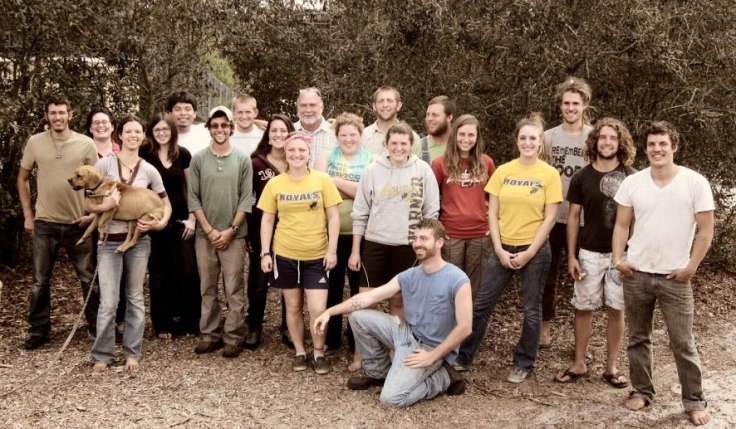
Kirby went through the H.E.A.R.T. program in the fall of 2011 along with his sister, Amanda, and 18 other students. He would later go on to work there as interim garden manager in 2012 (a time when he humbly called himself the Chief Agronomist). Emilie also attended H.E.A.R.T. as a student in the spring of 2012 with 6 other students. We would whole-heartedly recommend that anyone considering work in international development consider going through the H.E.A.R.T. program. Even knowing now that Peace Corps provides their own training (and we expect it to be great), we consider ourselves to be blessed to have engaged in the H.E.A.R.T. experience.
Training Courses
Here is a brief breakdown of the classes offered at H.E.A.R.T.
Sustainable Agriculture
In this class we learned biointensive gardening practices to be implemented in a variety of climates and landscapes. We gained firsthand experience in agriculture processes from soil preparation and amendment to market and table.
Animal Husbandry
This class teaches small animal husbandry practices for goats, rabbits, chickens, ducks, quail, and fish. We learned principles of raising poultry and mammals of all kinds, but coursework focused primarily on species that are well adapted to the tropics and offer a high yield of protein in proportion to feed input. We also gained first hand experience in care, maintenance and management of animal resources for the community.
Appropriate Technology
In this class we learned to use limited available resources to solve everyday problems in the developing world. Projects included basic mechanics, construction, woodworking, road maintenance, fence building, and pedal power solutions.
Primary Health
This class taught us about common health risks and diseases in developing nations. We learned prevention strategies, first aid and basic treatment practices. We also discussed the challenges and importance of sanitation and good hygiene.
Nutrition
The nutrition class, now combined with primary health, taught proper nutrition, food preparation, and food preservation. We used primitive outdoor cook stoves and experimented with solar energy to prepare meals. Partnering with the village and student gardens, we learned to make use of local harvest and work with limited food resources.
Cross-cultural Communication
In this class, classroom lecture and discussion centered on navigating life in cultures that vary dramatically from those in which we are comfortable. We practiced soft skills and cultural sensitivity, and we visited diverse communities to interact and engage with people from different backgrounds.

In addition to our training at H.E.A.R.T., we also took courses at ECHO in Fort Myers, Florida. ECHO (Educational Concerns for Hunger Organization) is a faith-based organization that offers resources and support to missionaries and agriculture development workers in developing countries. From their website, echonet.org, “ECHO is a growing network for sharing information, books, ideas, and seed of useful food, forage and agroforestry plants, techniques and solutions to problems faced by small scale farmers overseas.”
We were first introduced to ECHO as students at H.E.A.R.T. In 2011, Kirby attended ECHO’s Annual International Agriculture Conference. Emilie also toured the ECHO farm as a H.E.A.R.T. student. We visited on several other occasions, touring the farm and visiting the bookstore and nursery there. As our departure date crept closer, we decided to attend a weeklong Tropical Agriculture Development (TAD) course as a refresher. We attended Tropical Agriculture I: The Basics.
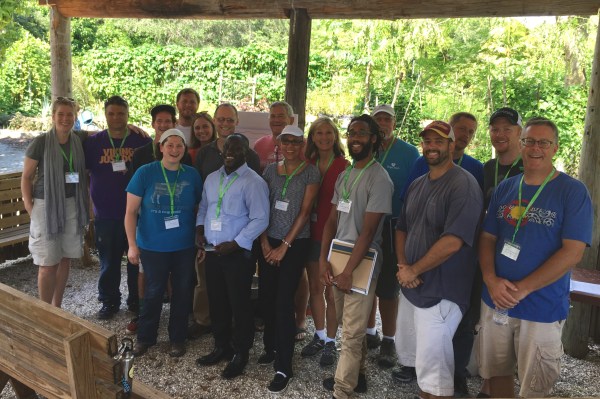
The TAD course that we attended, along with 18 other participants, spanned 5 days and included 20 class sessions. A very experienced, knowledgeable staff led us through topics including poverty mentality, community development, soil life and restoration, green manure cover crops, animal production systems, appropriate technology, water stewardship, underutilized crops, agroforestry, botany, nursery management, propagation, and more. The courses included classroom sessions as well as farm demonstrations. The staff was friendly, helpful and encouraging. They even rotated through our meals to give more opportunity for networking, asking questions and building relationships. The research, field trial information and resources available through their network are invaluable. The biggest impact of all was made by the opportunity to fellowship with so many wonderful people from the staff and interns to the course participants.
If you are interested in any kind of work in international development, we strongly recommend connecting with these two organizations.

 thequams.com